

Does domain extension really matter? As of March 2026, 43.6% of websites worldwide use .com, while 1.0% use .ca. That makes .com the clear global leader. Still, if your business targets customers in Canada, popularity alone should not decide your domain strategy. Local trust, geo-targeting and search visibility matter just as much.
Why Choosing Between .com vs .ca Matters More Than Ever
Choosing between a .com vs .ca domain is more than just a branding decision, it directly affects your search engine rankings, audience targeting and customer trust.
For Canadian businesses, this decision plays a critical role in online visibility. Should you go global with a .com domain or focus locally with a .ca internet domain? In 2026, with AI-driven search evolving rapidly (including systems influenced by Google), domain selection plays an even bigger role in search intent matching.
If you're wondering “which domain is better for SEO in Canada?” This guide explains the SEO impact, user perception and strategic advantages of each option in simple terms.
What is a Top-Level Domain (TLD)?
A Top-Level Domain (TLD) is the final part of your website address. The extension users see at the end.
Examples:
- yourbusiness.com
- yourbusiness.ca
- yourbusiness.org
Types of TLDs:
- Generic TLDs (gTLDs) like .com, .org
- Country-code TLDs (ccTLDs) like .ca, .uk, .in
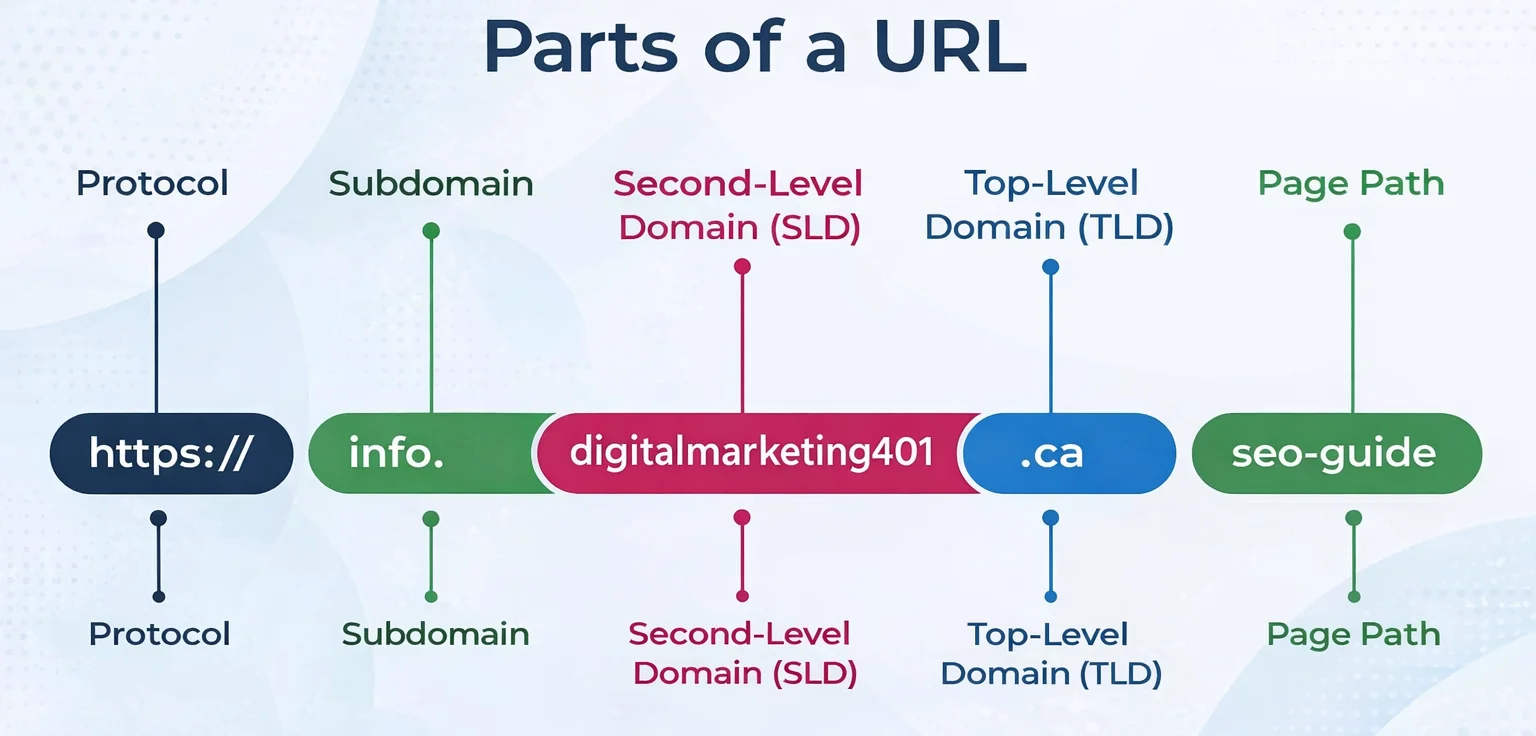
How TLDs Fit into the DNS Hierarchy
When you enter a domain, DNS converts it into an IP address so your website loads.
SEO Insight: A TLD like .ca helps search engines understand your website targets Canadian users, improving local rankings.
Do Top-Level Domains (TLDs) Affect SEO in Canada?
Yes, TLDs can affect SEO in Canada, especially for location-based targeting. A .ca domain is a strong geo-targeting signal that tells Google your website is intended for Canadian users, while a .com domain is generally country-neutral and works better for broader international targeting.
According to Google, country-code domains like .ca are strong indicators of geographic relevance.
How Google Evaluates Domains:
Google considers:
- Domain extension (.ca vs .com)
- User location
- Backlinks from Canadian websites
- Content relevance
- Hosting/server location
Key Insight:
A .ca domain automatically tells Google your website is meant for Canadian users, improving your chances of ranking in:
- “near me” searches
- Local service queries
- Canadian SERPs
Search engines like Google use domain extensions along with other factors such as hosting location, local backlinks and user behaviour to determine rankings.
Final Verdict in 3 Points (Quick Summary)
.ca domain → Best for ranking in Canada and building local trust
.com domain → Best for global reach and scalability
Both domains → Best strategy for long-term growth and brand protection
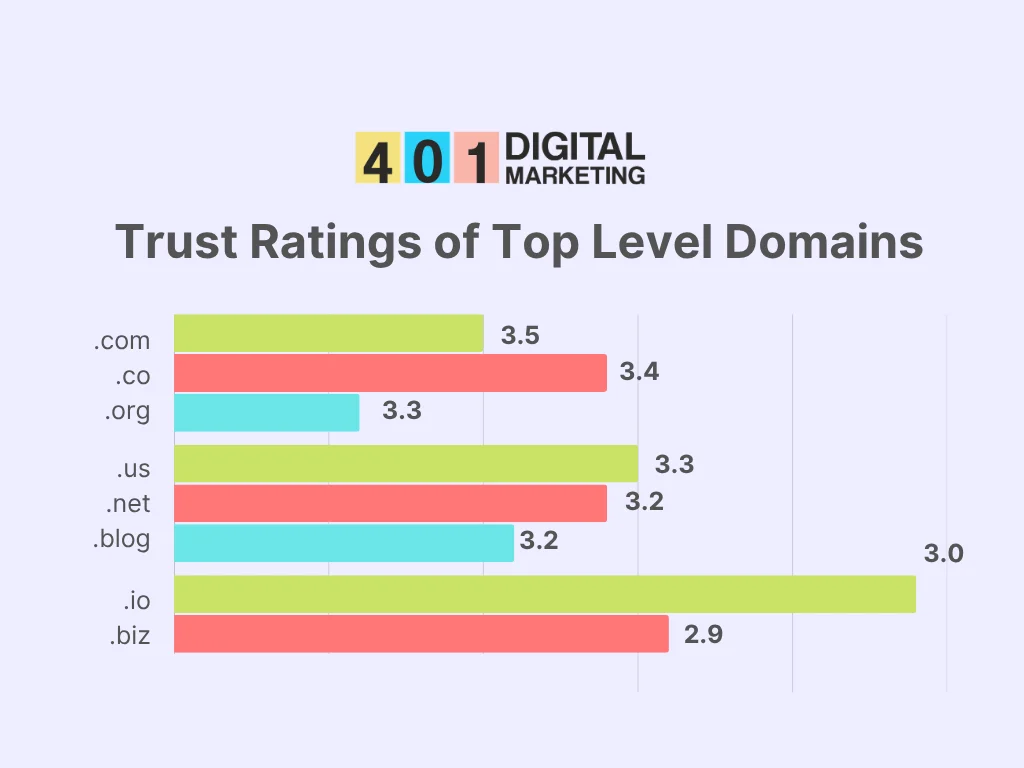
What Is a .com Domain?
A .com domain is one of the most widely used top-level domains (TLDs) in the world. Because it is not tied to any specific country, it works well for businesses that want broader reach and a more international brand image.
Many users naturally expect websites to end in .com, which makes this extension familiar and easy to remember. That built-in recognition can support branding, especially if your company plans to serve customers beyond Canada.
Advantages of a .com Domain
Global Recognition
.com is the most recognized domain extension worldwide. It gives businesses a universal online identity and works well across different markets.
User Familiarity
People are used to seeing .com websites, so they often remember them more easily and may type them directly into their browser.
International Flexibility
A .com domain does not send a country-specific signal, which makes it a strong option for businesses targeting customers in multiple regions.
Brand and Resale Value
Because .com domains are in high demand, premium names often hold strong long-term branding and resale potential.
Potential Drawbacks of a .com Domain
Limited Availability
Since millions of .com domains are already registered, finding a short, brandable name can be difficult.
Higher Acquisition Cost
Popular .com domains often cost more than country-code extensions, especially in competitive industries.
Brand Confusion Risk
If your brand also operates locally in Canada, using only .com may reduce the local identity and trust that some Canadian users expect.
What Is a .ca Domain?
A .ca domain is the official country-code top-level domain (ccTLD) for Canada. It is managed by the Canadian Internet Registration Authority (CIRA) and is designed for individuals, organizations, and businesses with a Canadian presence.
For businesses that mainly target customers in Canada, a .ca domain can strengthen local trust and improve search visibility for Canadian audiences.
Advantages of a .ca Domain
Stronger Trust In Canada
Canadian users often see .ca websites as more local, reliable, and relevant. It can signal that your business understands the Canadian market.
Local SEO Benefits
A .ca domain helps search engines associate your website with Canada, which can improve visibility for Canadian searches and location-based queries.
Better Click-Through Rates
When Canadian users compare search results, they may feel more confident clicking a .ca domain because it appears more locally relevant.
More Naming Availability
Compared with .com, .ca usually offers more chances to secure a clean and brandable domain name.
Brand Protection In Canada
Registering your .ca domain helps protect your business identity within the Canadian market.
Potential Drawbacks of a .ca Domain
Limited International Appeal
A .ca domain may appear more region-specific, which can be a disadvantage if your business wants strong global positioning.
Perception of Local-Only Scope
Some users may assume a .ca website serves only Canadian customers, even if the company operates internationally.
Canadian Presence Requirements
To register a .ca domain, you must meet Canadian presence rules, which may not work for every business.
Quick Comparison: .com vs .ca
| Feature | .com | .ca |
|---|---|---|
| Best for | Global reach | Canadian audience |
| Recognition | Worldwide | Strong in Canada |
| SEO signal | Neutral | Canada-focused |
| Availability | Lower | Higher |
| Trust with Canadians | Moderate | High |
| Eligibility | Open to all | Canadian presence required |
What’s the Difference Between ccTLD and gTLD?
Country Top-Level Domain (ccTLD)
Common uses:
- Target local audiences
- Improve regional SEO
- Build country-specific trust
- Increase click-through rates from local users
Generic Top-Level Domain (gTLD)
A gTLD like .com is not tied to any location.
Best for:
- International businesses
- Global branding
- Multi-country targeting
Case Study Example (Practical Insight)
A Toronto-based home service company switched from .com to .ca and saw:
- +38% increase in local traffic
- +22% improvement in click-through rate
- Higher rankings for “service near me” keywords
This shows how strong geo-targeting signals can impact performance.
.Ca vs .Com SEO: Which Performs Better?
Does Google Rank .ca Higher in Canada?
Yes, Google prioritizes .ca domains for Canadian searches because they act as a geo-targeting signal.
Additional Ranking Factors Are:
SEO Performance That Depends Upon:
- Local backlinks from Canadian websites
- Canadian hosting servers
- Location-based content
- User engagement metrics
Combining a .ca domain with local SEO strategies significantly improves visibility.
Should You Use A .Ca Domain Over A .Com for SEO?
If your audience is in Canada: YES
If your audience is global: NO
If both: Use both
Which Domain Extension is Better for Seo?
There is no single winner in .com vs .ca vs .org.
- Best for Canada: .ca
- Best for global reach: .com
- Best for nonprofits: .org
Want to Rank Higher in Canada?
If you're unsure whether to choose .com vs .ca, let the experts at Digital Marketing 401, Mississauga guide you. We help businesses improve rankings, traffic and conversions with smart SEO strategies.
How Do You Redirect A .Com Domain To A .Ca Domain?
To redirect a .com domain to a .ca domain, use a 301 redirect, which permanently forwards users and search engines.
Steps:
- Register both domains
- Choose your primary domain (e.g., .ca)
- Set up redirect in hosting or DNS
- Ensure all pages redirect properly
This helps consolidate SEO authority and prevents duplicate content issues.
Legal and Strategic Considerations for Canadian Businesses
Choosing between .com vs .ca isn’t just about SEO. It also involves legal requirements, brand strategy and long-term growth planning. Here are the key factors every Canadian business should consider:
1. Registration Rules (CIRA Requirements)
If you’re planning to register a .ca domain, you must meet the eligibility criteria set by the Canadian Internet Registration Authority (CIRA).
This means:
- You must be a Canadian citizen, permanent resident or registered business
- You must have a valid connection to Canada
While this adds an extra step compared to .com, it actually works in your favor. This exclusivity increases trust and credibility, as users know your business has a legitimate Canadian presence.
On the other hand, a .com domain is open to anyone globally with no restrictions, no verification. This makes it quick and easy to register, but it doesn’t provide the same level of local trust.
2. Domain Name Availability
One of the biggest challenges with .com domains is availability. Since it’s the most popular TLD globally, many high-quality and brandable names are already taken.
With .ca domains, competition is lower, making it easier to secure your ideal domain name.
Which means:
- You have a higher chance of securing your preferred business name
- You can avoid long or complicated domain variations
- You can build a cleaner, more memorable brand identity
For new businesses in Mississauga, Toronto or across Ontario, this can be a major advantage.
3. Domain Forwarding and Dual Registration Strategy
Instead of choosing between .com and .ca, many smart businesses register both domains.
This strategy helps you:
- Protect your brand name from competitors
- Capture both local and global traffic
- Prevent customer confusion
- Using 301 redirects (domain forwarding), you can direct one domain (e.g., .com) to your
- primary domain (e.g., .ca).
This ensures:
- A seamless user experience
- Consolidated SEO authority
- No duplicate content issues
For example, Canadian businesses often use .ca as the primary domain for local SEO, while keeping .com for future expansion.
Practical Decision Guide: .Com vs .Ca
Choose .ca if:
- You target Canadian customers
- You want local SEO benefits
- You run a Canadian business
Choose .com if:
- You want global reach
- You plan international expansion
Consider both if:
- You want maximum visibility
- You want brand protection
Is A .Ca Domain Worth it For Canadian Businesses?
Yes, a .ca domain is worth it if your target audience is in Canada. It strengthens local SEO performance, builds user trust, and improves click-through rates, making it a strong choice for Canadian businesses.
ALSO READ: How AI is reshaping digital marketing and SEO in today’s world.
Local to Global: Unlock Your SEO Potential
A smart strategy is to combine both domains.
Start with a .ca domain to build local authority, then expand using a .com domain for global reach.
This approach helps you:
- Strengthen Canadian SEO
- Expand internationally
- Protect your brand identity
Conclusion
When comparing .com vs .ca, your decision should align with your audience:
- Choose .ca for Canadian SEO dominance
- Choose .com for global expansion
- Choose both for maximum impact
In today’s competitive digital space, your domain isn’t just a URL, it’s your SEO foundation and brand identity.
Ready to Grow Your Business Online?
From automotive marketing to furniture marketing, our team at Digital Marketing 401 delivers data-driven digital marketing solutions tailored for Canadian businesses.
Cost Comparison: .com vs .ca Domains
| Factor | .com Domain | .ca Domain |
|---|---|---|
| Registration Cost | Generally lower and widely available | Slightly higher due to regional restrictions |
| Availability | Limited (many names already taken) | More availability for clean, brandable names |
| Renewal Fees | Standard pricing across most registrars | Standard pricing, similar to .com |
| Value for Money | Strong for global reach and scalability | High value for local SEO and Canadian targeting |
Common Mistakes to Avoid
Avoid these common mistakes when choosing between .com and .ca domains:
❌ Using both domains without proper redirects
Failing to set up 301 redirects can split traffic and weaken your SEO performance.
❌ Creating duplicate content across domains
Having the same content on both .com and .ca without canonicalization can confuse search engines and hurt rankings.
❌ Ignoring geo-targeting signals
Not aligning your domain choice with your target audience (Canada vs global) can reduce visibility in relevant search results.
❌ Not updating backlinks after domain changes
If you switch domains, failing to update backlinks can lead to lost authority and reduced rankings.
❌ Poor technical SEO setup
Issues like incorrect redirects, missing sitemaps or improper indexing can negatively impact your website’s performance.
FAQs. About .Com vs .Ca
1. Which is Better for SEO in Canada: .Com Vs .Ca?
For Canadian audiences, a .ca domain usually performs better because it signals local relevance to search engines. However, if your business targets global customers, a .com domain can offer broader reach and flexibility.
2. Should I choose a .ca domain for my Canadian business?
Yes, if your customers are mainly in Canada, a .ca domain builds trust and improves local SEO. At Digital Marketing 401, we often recommend .ca for businesses focused on Canadian markets.
3. Can I Use Both .com And .ca Domains for My Website?
Yes, many businesses register both domains and redirect one to the other. This strategy helps protect your brand and ensures you capture both local and international traffic effectively.
4. Do Domain Extensions Affect Digital Marketing Performance?
Yes, your domain extension can influence click-through rates, trust and local SEO rankings, all of which impact digital marketing results. Choosing the right domain supports better campaign performance and audience targeting.
5. How Does AI Impact Domain Choice and Seo?
AI-driven search engines analyse location signals, user intent and relevance. A .ca domain helps AI understand that your content is meant for Canadian users, improving visibility in AI-generated search results.
6. Is A .Ca Domain Better for Industries Like Automotive or Furniture Marketing?
Yes, for local industries like automotive marketing or furniture marketing, a .ca domain helps attract nearby customers and improves local search rankings, especially for location-based queries.
7. What is the Cost of Digital Marketing For A Canadian Business?
The cost of digital marketing varies based on services like SEO, paid ads and content creation. Choosing the right domain, such as .ca, can improve ROI by targeting the right audience more effectively.
8. Can I Rank Globally with A .Ca Domain?
Yes, but it may be more challenging since .ca is geo-targeted to Canada. If global reach is important, combining .ca with a .com domain is often the best strategy.
9. Is It Worth Investing in Both Domains for Long-Term Growth?
Yes, owning both domains helps with brand protection, SEO flexibility and future expansion. It’s a smart long-term investment for businesses planning to scale.
Recent Blogs

Toronto Digital Marketing Agency That Drives Leads
Choose a Toronto digital marketing agency built to rank higher, generate qualified leads, and turn every marketing dollar into measurable growth now.

How to Get More Google Reviews for Your Business
Learn how to get more Google reviews with a proven request process, better timing, and follow-up that builds local trust, calls, and sales consistently.

Dental Clinic SEO Case Study That Drives Patients
See how a focused dental clinic SEO case study turns local visibility into calls, booked appointments, and measurable new-patient growth for clinics today.