
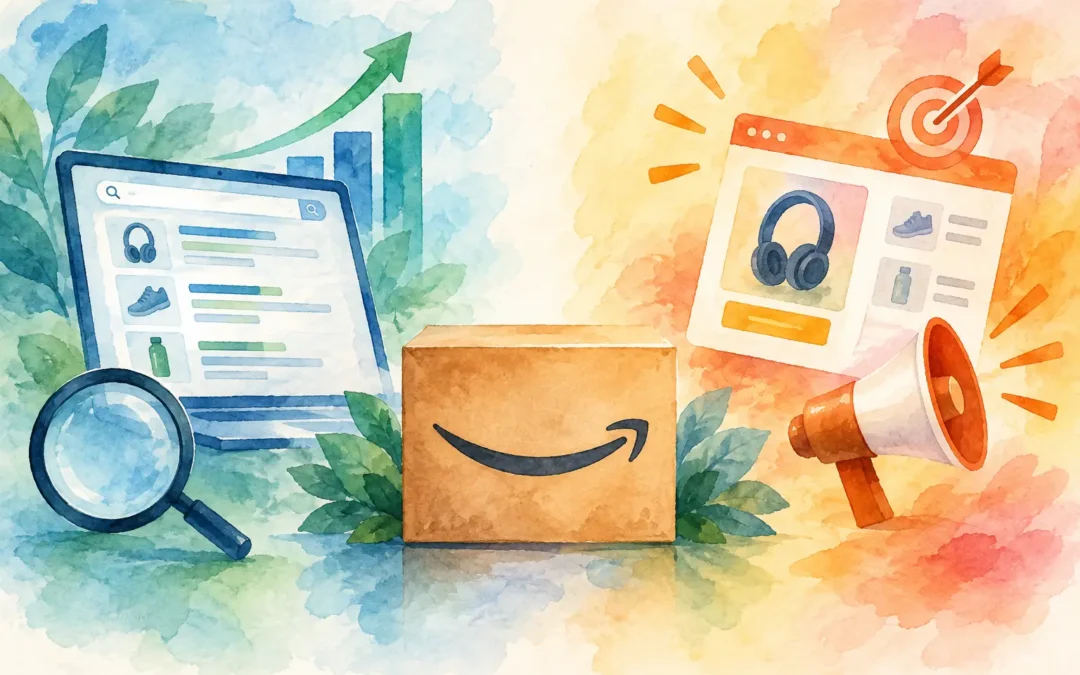
A product can be genuinely better than its competitors and still lose sales on Amazon because shoppers never see it. That is the real decision behind Amazon SEO vs Amazon advertising: do you build visibility that compounds over time, pay for immediate placement, or use both to control more of the results page?
For most serious sellers, this is not an either-or decision. Amazon SEO and paid advertising solve different growth problems. One improves a listing’s ability to rank and convert organically. The other puts products in front of high-intent shoppers now. The brands that grow profitably understand where each channel earns its place – and where wasted spend begins.
Amazon SEO vs Amazon Advertising: The Core Difference
Amazon SEO is the work of improving a product listing so Amazon’s algorithm is more likely to show it in relevant organic search results. It includes keyword research, title optimization, bullet points, backend search terms, images, A+ Content, pricing, reviews, inventory health, and conversion rate. The objective is simple: rank higher for terms shoppers already use and turn more visits into orders.
Amazon advertising is paid placement within Amazon’s ecosystem. Sponsored Products, Sponsored Brands, Sponsored Display, and other campaign types allow sellers to bid for visibility. You pay when a shopper clicks, not when they merely see the ad. The objective is speed, control, and scalable reach around chosen keywords, products, or audiences.
The difference matters because organic rankings are earned through relevance and sales performance, while ads can generate traffic before a listing has established ranking strength. SEO can reduce long-term dependence on paid clicks. Advertising can create the initial sales velocity needed to support organic growth.
What Amazon SEO Delivers
A well-optimized listing works long after the initial work is complete. When your product begins ranking organically for high-value, relevant search terms, each sale does not require another advertising click. That gives SEO a powerful advantage for brands that want stronger margins and more stable growth.
But Amazon SEO is not simply adding popular keywords to a title. Amazon wants to show products that shoppers are likely to buy. If a listing gets impressions but fails to convert, rankings can stall or slip. Strong SEO therefore combines discoverability with persuasion: clear product positioning, accurate specifications, persuasive imagery, competitive price points, review strength, and a shopping experience that removes hesitation.
For example, a furniture seller may want to rank for a broad phrase such as “modern dining table.” That keyword has volume, but it also has fierce competition and mixed buyer intent. A better strategy may target more specific phrases such as “solid wood round dining table for small spaces” when the product genuinely fits that need. Specific keywords often attract shoppers who are closer to purchasing, which can improve conversion and organic performance.
SEO is especially valuable when a product has proven demand, a differentiated offer, and enough inventory to support consistent sales. It takes time. New listings rarely claim meaningful organic positions overnight, and competitive categories require disciplined optimization and ongoing testing. Still, the return can be substantial because every improvement in ranking and conversion can make future advertising more efficient as well.
The hidden strength of listing conversion
Traffic does not create revenue by itself. A listing that converts at 15% is often worth far more than one converting at 5%, even if both receive the same number of visitors. Better images, a clearer value proposition, compelling comparison charts, and accurate product details can raise conversion without increasing ad bids.
This is where many Amazon sellers lose money. They send paid traffic to weak listings, then blame advertising for poor results. The campaign may be doing its job. The listing is simply failing to close the sale.
What Amazon Advertising Delivers
Amazon advertising delivers immediate visibility. A new product with no organic ranking can appear in front of shoppers searching for relevant terms within hours of launching a campaign. That makes paid ads essential for product launches, seasonal pushes, competitive categories, inventory clearance, and brands entering a new subcategory.
Advertising also provides market intelligence. Search term data reveals how customers actually find and buy products. It can expose valuable keywords that were missed during listing research, show which products shoppers compare against yours, and identify terms that generate clicks without sales. Used correctly, paid campaigns become a research engine for better SEO decisions.
The trade-off is straightforward: visibility stops when budget stops. If your margins cannot support the cost per click and conversion rate required to win a sale, scaling ads can scale losses. A high sales number is not automatically a successful campaign if the advertising cost of sale, total advertising cost of sale, and contribution margin do not work together.
For an established product, the goal should not be to bid aggressively on every keyword. It should be to protect profitable placements, capture high-intent demand, retarget engaged shoppers where appropriate, and steadily remove wasted spend. Broad discovery campaigns may be useful, but they need guardrails. Exact-match campaigns on proven terms often deserve stronger budgets because they offer more control over relevance and profitability.
When paid ads are the better first move
Advertising should lead when speed matters. If you are launching a new product, entering a crowded category, promoting a limited-time offer, or trying to regain momentum after a ranking drop, waiting for organic traffic alone can be costly.
Ads are also the better first move when you need data. A seller may believe a product should rank for one set of keywords, while actual shoppers respond to a completely different set. Paid search campaigns can test that assumption quickly, provided the listing, pricing, and offer are ready to compete.
The Strongest Strategy Uses Both
The most profitable Amazon programs connect SEO and advertising rather than treating them as separate services. Paid campaigns bring qualified traffic to a conversion-focused listing. The sales and search-term data reveal where demand exists. The listing is then refined around the terms that produce profitable orders. As organic rank improves, ad spend can shift toward defending priority keywords, expanding product discovery, and targeting competitors strategically.
Think of Amazon SEO as the foundation and advertising as the accelerator. An accelerator is valuable, but it cannot fix a weak foundation. Conversely, a strong listing without advertising may grow too slowly to meet revenue targets or outrun competitors.
A practical budget split depends on product maturity. New products often need a heavier advertising investment because they lack reviews, sales history, and organic rank. Products with proven ranking may place more emphasis on listing improvements and tightly managed campaigns. There is no universal percentage that works for every category. A low-margin commodity product needs a very different ad strategy than a premium branded item with repeat buyers and stronger margins.
How to Decide Where to Invest First
Start with the listing. If the product images are poor, the title is generic, the bullets do not answer buying questions, or the offer is uncompetitive, investing heavily in ads will usually magnify the problem. Fix the conversion path first.
Then assess your business objective. If you need immediate sales volume, launch momentum, or keyword data, advertising deserves priority. If your product already has sales history but struggles to maintain visibility without constant ad spend, SEO optimization deserves more attention.
Finally, measure performance beyond revenue. Watch conversion rate, organic rank, click-through rate, cost per acquisition, advertising cost of sale, total advertising cost of sale, return rate, and profit after fees. The right choice is the one that produces sustainable sales, not the one that creates the largest dashboard number.
Digital Marketing 401 approaches Amazon growth as a connected revenue system: listing optimization, advertising management, creative assets, and performance analysis working toward the same commercial goal. Sellers do not need more activity. They need a clear plan that turns Amazon visibility into profitable orders.
The next productive step is not choosing a side in the Amazon SEO versus advertising debate. It is finding the exact point where shoppers stop, hesitate, or buy – then investing in the channel and listing improvements that move that point in your favor.