
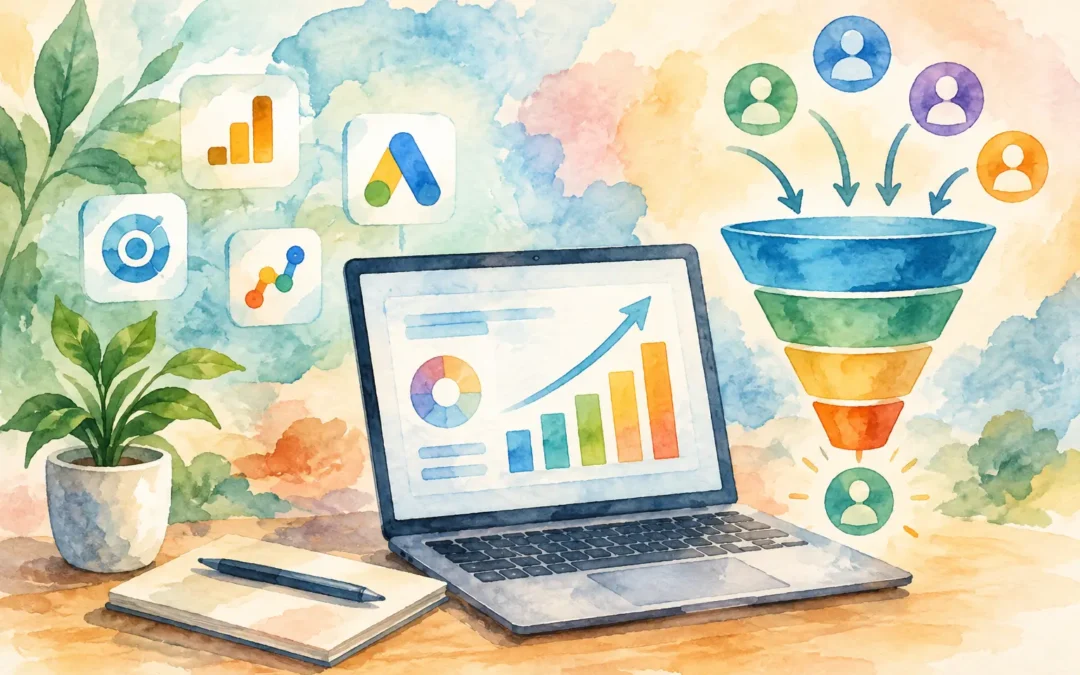
A campaign can generate thousands of clicks and still be a bad investment. If you cannot see which ads, keywords, landing pages, and calls turn into real opportunities, you are making budget decisions on guesswork. The best conversion tracking tools replace guesswork with evidence, helping business owners see where leads come from, what they cost, and which marketing actions deserve more investment.
For local service companies, dealerships, dental practices, manufacturers, and ecommerce brands, conversion tracking should not stop at a form submission. A tracked result may be a phone call, booked appointment, quote request, financing application, store visit, sale, or qualified lead accepted by your team. The right setup connects marketing activity to revenue-producing actions.
What a Conversion Tracking Tool Must Actually Do
A tracking platform is only valuable when it answers commercially useful questions. Which Google Ads campaign drove booked consultations? Did organic traffic produce qualified leads or just page views? Are callers from paid search serious buyers? Did your redesigned website improve form completion rates?
The strongest setups capture core website actions, attribute them to the correct channel, and send reliable conversion data back to the advertising platforms that use it for optimization. They also account for the reality that customers often visit more than once, switch devices, call instead of filling out a form, or submit a lead that never becomes a customer.
There is no single winner for every business. A company running Google Ads may need native ad-platform tracking and call attribution. An ecommerce store may need product-level revenue data. A sales-driven B2B manufacturer may get more value from CRM attribution than from another analytics dashboard. The best choice depends on how you acquire, qualify, and close leads.
Best Conversion Tracking Tools for Growing Businesses
Google Analytics 4
Google Analytics 4, commonly called GA4, is the foundation for most website measurement. It tracks user behavior through events, allowing you to record actions such as form submissions, clicks on phone numbers, appointment bookings, brochure downloads, purchases, and thank-you-page visits.
GA4 is especially useful for understanding the path users take before converting. You can compare traffic sources, review landing-page performance, build audiences, and identify where visitors abandon the journey. For an ecommerce business, it can report product views, cart activity, checkout steps, and purchase revenue.
Its limitation is that it is not a complete lead-quality system. A form submission may count as a conversion even if the lead is spam, outside your service area, or not ready to buy. GA4 should be the measurement layer, not the only source of truth.
Google Ads Conversion Tracking
If Google Ads is part of your lead generation plan, native Google Ads conversion tracking is non-negotiable. It shows which campaigns, search terms, devices, audiences, and bidding strategies contribute to tracked actions. More importantly, it gives Google’s automated bidding system the data it needs to pursue more valuable leads.
Set up separate conversion actions for different outcomes. A completed estimate request, a call lasting more than 60 seconds, a scheduled appointment, and an ecommerce purchase do not carry the same value. When everything is treated as one generic conversion, campaign optimization becomes weaker.
For higher-ticket services, enhanced conversions and offline conversion imports can make a major difference. When your sales team marks a lead as qualified, quoted, won, or closed, that data can be sent back to Google Ads. Over time, your budget can shift toward the searches and audiences that produce actual customers, not just inquiries.
Google Tag Manager
Google Tag Manager is not an analytics platform by itself, but it is one of the most useful tools in a professional tracking stack. It lets your team deploy and manage tracking tags without repeatedly editing website code for every marketing change.
It can trigger tracking when someone submits a form, clicks a call button, reaches a booking confirmation page, watches a key video, or engages with a live chat widget. It also makes it easier to organize pixels and scripts from GA4, Google Ads, Meta, LinkedIn, call tracking providers, and other systems in one controlled environment.
The trade-off is technical complexity. A poorly configured container can duplicate conversions, fire tags on the wrong pages, or miss important events entirely. Testing in preview mode and validating results inside each platform is essential.
CallRail
CallRail is a strong choice for businesses where phone calls drive revenue. This includes dentists, home-service companies, law firms, auto dealers, clinics, and any local business where a customer wants to speak with someone before committing.
The platform uses dynamic number insertion to show unique phone numbers to visitors based on the marketing source that brought them to the site. That means you can tell whether a call came from Google Ads, organic search, a Facebook campaign, a directory listing, or another channel. It can also record calls, apply source-level reporting, and help teams review lead quality.
Call tracking creates a more accurate picture of performance, but it must be handled responsibly. Businesses should use clear call-recording disclosures where required and ensure their configuration aligns with applicable privacy rules. Tracking a call is useful. Tracking it without a proper process can create avoidable risk.
HubSpot
HubSpot is a powerful option when the question is not just “Which channel produced a lead?” but “Which channel produced revenue?” Its CRM capabilities allow sales and marketing teams to track contacts through form submission, follow-up, deal stages, closed revenue, and retention activity.
For businesses with longer sales cycles, HubSpot can connect marketing performance to the outcomes that matter most. A manufacturer may receive fewer form submissions than a retailer, but one qualified RFQ could be worth tens of thousands of dollars. CRM attribution helps leadership avoid overvaluing volume while undervaluing lead quality.
HubSpot requires disciplined adoption. If sales representatives do not update lifecycle stages and deal values, reports become incomplete. The platform delivers its best value when your operational process is as reliable as your marketing process.
Meta Pixel and Conversions API
Businesses using Facebook and Instagram ads need more than the standard browser pixel. Meta Pixel tracks website events such as page views, leads, purchases, and registrations, while Conversions API sends selected event data from a server-side source.
Using both improves event reliability when browser restrictions, consent choices, and ad blockers reduce standard pixel tracking. This can strengthen audience building, campaign optimization, and reporting for ecommerce brands, restaurants, local promotions, and lead-generation campaigns.
Do not send every website action to Meta as a high-value conversion. Choose events that reflect meaningful progress, such as a confirmed booking, qualified lead, completed purchase, or form submission that passes spam validation. Better signals create better optimization.
Hotjar or Microsoft Clarity
Analytics tells you what happened. Behavior tools such as Hotjar or Microsoft Clarity help explain why it happened. Heatmaps, session recordings, and scroll-depth reports can reveal whether users are missing your form, getting stuck on mobile, ignoring a weak call to action, or abandoning checkout because of a confusing field.
These tools are especially valuable after a website redesign or when paid traffic is arriving but conversion rates remain disappointing. They do not replace lead attribution, but they support conversion rate optimization by exposing friction that standard reports cannot show.
Use recordings with care and configure privacy masking properly. Your goal is to improve the user experience, not expose sensitive customer information.
How to Build a Tracking Stack That Supports Revenue
Start by defining a conversion hierarchy. Primary conversions should represent outcomes that create real sales opportunities, such as purchases, booked appointments, qualified quote requests, or calls that meet a meaningful duration threshold. Secondary conversions can include brochure downloads, chat starts, or email sign-ups. They are useful indicators, but they should not automatically guide your ad bidding.
Next, make sure every conversion has a clear trigger. A form conversion should fire only after successful submission, not when a user merely clicks the submit button. Phone-click tracking should be separate from tracked inbound calls. Ecommerce revenue should include accurate order values, taxes and shipping rules where appropriate, and refunds if your reporting requires net revenue.
Then connect the systems that matter. GA4, Google Ads, Tag Manager, call tracking, and your CRM should not operate as isolated dashboards. A well-built stack passes useful data from the website to ad platforms and, where possible, from qualified or closed leads back into campaign reporting.
Finally, audit tracking before you make budget decisions. Test forms on desktop and mobile. Place test calls. Confirm that conversions appear once, not twice. Compare website form counts with CRM leads and compare call reports with your call-handling records. A clean dashboard built on faulty tracking is still faulty.
The Tool Is Only as Good as the Strategy Behind It
The most expensive mistake is choosing a platform because it has attractive reports, then tracking the wrong actions. A campaign optimized for low-quality form fills can look successful while your sales team gets buried in junk leads. A call-heavy business that ignores call attribution can cut the exact campaigns that are generating its best customers.
Digital Marketing 401 approaches conversion tracking as part of a full growth system: traffic acquisition, conversion-focused web experiences, lead quality, and revenue reporting must work together. The goal is not to collect more data. The goal is to make every marketing dollar easier to defend and more profitable to scale.
Choose the tools that reflect how your customers actually buy, then make qualified leads and closed revenue the signals that guide your next move.